fbpx
applying treatment to a toenail with fungus

Why Does My Toenail Still Look Bad After Fungus Treatment?

You finished treating your toenail fungus, but your nails are still thick, yellow, or misshapen. Why does my toenail still look bad after fungus treatment, even when the treatment worked?

The answer is often simple: even after the infection clears, the damaged nail must grow out before a healthier-looking nail can take its place. The encouraging news is that you may have options to improve its appearance in the meantime.

At Carrollton Foot Center, we help patients understand why their nails look different and whether KeryFlex Nail Restoration could improve their appearance.

Why Doesn’t Your Toenail Look Normal After Fungus Treatment?

Toenails grow from the nail matrix beneath the skin near the base of the nail. Once a section of the nail becomes damaged, it can’t be repaired. The new nail must gradually replace it.

A big toenail can take 12 to 18 months to grow out completely. That means discoloration or thickening may remain visible long after successful fungal treatment. Seeing an imperfect nail doesn’t automatically mean your treatment failed.

Fungus also isn’t the only explanation for deformed toenails. Other causes include:

  • Repeated pressure: Tight shoes or sports can repeatedly injure a toenail.
  • Past injuries: A crushed or split toenail may grow back unevenly.
  • Other nail conditions: Psoriasis and other disorders can change a nail’s color, thickness, or shape.
  • Persistent or recurring fungus: Sometimes an infection needs additional attention.

A podiatrist can help determine what’s behind the changes and what options make sense for your nail.

How Can KeryFlex Improve a Damaged Toenail?

If you’re tired of hiding a damaged nail, KeryFlex may offer a way to improve its appearance without waiting for the entire nail to grow out.

During an office visit, a trained provider prepares the remaining natural nail, applies a specialized resin, shapes it to resemble a toenail, and hardens the material with a curing light.

The result is a flexible, natural-looking restoration. Your natural nail can continue growing underneath, and suitable patients may see an immediate cosmetic difference.

KeryFlex is designed to improve how your toenail looks while the natural nail continues to grow.

How Is KeryFlex Different From Acrylic Toenails?

Unlike conventional salon acrylics, KeryFlex is designed specifically for cosmetic restoration of damaged nails.

The material is flexible enough to move with the toe, resists everyday moisture, and can be worn with regular nail polish. As your natural nail grows, the restoration can be maintained or replaced to help keep your toenail looking its best.

Can KeryFlex Treat Toenail Fungus?

KeryFlex improves a nail’s appearance, but it isn’t an antifungal treatment.

If nail fungus is still present, your podiatrist can discuss treatment for the infection and whether cosmetic restoration may be appropriate as part of your care plan.

That way, you can address the cause of the nail changes while exploring ways to feel better about how your toenail looks.

Is KeryFlex Right for Your Damaged Toenail?

You don’t necessarily have to wait a year or longer to feel more comfortable showing your toenails. With the right diagnosis, you can explore options for a healthier-looking nail and greater confidence in sandals or open-toed shoes.

At Carrollton Foot Center, we can examine persistent nail changes, discuss treatment when needed, and determine whether KeryFlex is an appropriate cosmetic option. You may have more options than simply waiting for your nail to grow out.

Consult with Board-certified podiatrist Dr. Naghmeh Lilly Khavari, a knowledgeable professional who is dedicated to her patients in Denton, Dallas, and Collin Counties. Dr. Khavari treats a wide range of conditions, from ingrown toenailsto foot and ankle injuries. Call Carrollton Foot Center‘s office (located in Carrollton, Texas) at (469)-998-3668 to schedule your first appointment today!
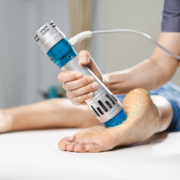
shockwave therapy on foot

Why Carrollton’s Active Residents Are Using Shockwave Therapy for Foot Pain

If you have driven past Lakeshore Park recently, you already know: Carrollton has been taken over by the pickleball craze. Combined with the daily rush of runners, cyclists, and walkers logging miles on the paved Carrollton GreenBelt, West Georgia residents are staying more active than ever.

And unfortunately, that means more overuse injuries. When ice and rest fail to work, active adults are turning to an advanced regenerative treatment to stay in the game: Radial Pulse Shockwave Therapy. In this blog, Carrollton Foot Center explains how this FDA-cleared technology works…and why it is replacing traditional treatments!

The Downside of the Pickleball and GreenBelt Boom

When you lunge for a pickleball at Longview Park or rack up miles on the GreenBelt trail, your foot is forced to absorb high impact forces. If your footwear lacks proper support, these repetitive impacts cause microscopic tears in your ligaments.

  • Often, patients try to ignore the early warning signs, unaware that they are uncovering the root causes of stubborn foot pain.
  • By the time they finally seek help, the tissue has become heavily inflamed, and stiff scar tissue has formed.
  • When you experience chronic pain for too long, your body no longer recognizes that there is an injury in that area, and the healing process shuts down.

What is Radial Pulse Shockwave Therapy (RSWT)?

Radial Pulse Shockwave Therapy (RSWT) is an advanced, non-invasive treatment that forces your body to restart its natural healing response.

  • Using an FDA-cleared device, we deliver high-energy ballistic sound waves deep through your soft tissue.
  • Instead of masking pain with medication, this creates controlled micro-trauma, triggering a new inflammatory condition in the treated area.
  • The emitted energy causes your cells to release biochemicals that build an array of new microscopic blood vessels, allowing the damaged tissue to gradually regenerate and heal at a cellular level.

3 Conditions Effectively Treated with RSWT

Because these ballistic sound waves penetrate deep into soft tissue, RSWT is very effective at increasing the rate of healing for tendinopathy and overuse running injuries.

Specifically, three common conditions respond very well:

  1. Plantar Fasciitis: The morning pain caused by an inflamed arch ligament is the most common hard-court and running injury we see. Shockwave application is a great option for resolving chronic heel pain without going under the knife.
  2. Achilles Tendinitis: The sudden starts and stops of racket sports place massive tension on the back of the heel. Shockwave therapy accelerates recovery for Achilles tendonitis, rebuilding the structural integrity of the tissue before a minor twinge becomes a devastating rupture.
  3. Neuromas & Diabetic Wounds: Beyond sports injuries, RSWT is highly effective at increasing circulation and triggering tissue regeneration for pinched nerves (neuromas) and slow-healing diabetic foot wounds.

Why Carrollton Residents Are Skipping Cortisone Shots

For decades, the standard quick fix for a sports injury was a cortisone injection. While steroids provide temporary relief, they only mask inflammation and can actually weaken your tendons over time.

Active adults in Carrollton are choosing Radial Pulse Shockwave Therapy because of its distinct clinical advantages:

  • Zero Downtime: You can complete a quick session and walk right out of the office.
  • No Needles or Scalpels: The treatment relies entirely on sound waves, making it 100% non-invasive.
  • True Regeneration: It builds new microscopic blood vessels and repairs your tissue rather than just hiding the symptoms.

If foot or ankle pain is keeping you off the Carrollton pickleball courts or the GreenBelt, stop waiting for it to magically disappear. Consult our team about shockwave therapy and get back to your active lifestyle!

Consult with Board-certified podiatrist Dr. Naghmeh Lilly Khavari, a knowledgeable professional who is dedicated to her patients in Denton, Dallas, and Collin Counties. Dr. Khavari treats a wide range of conditions, from ingrown toenails to foot and ankle injuries. Call Carrollton Foot Center’s office (located in Carrollton, Texas) at (469)-998-3668 to schedule your first appointment today!
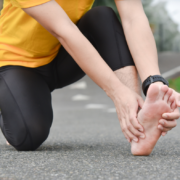
runner holding foot

Why Does It Feel Like I’m Walking on Bones?

Residents in Carrollton love staying active, whether that means jogging the Blue Trail, playing tennis, or taking a weekend stroll through the Elm Fork Nature Preserve. But what happens when your daily walk is suddenly derailed because every step feels like you are walking barefoot on sharp pebbles?

If the bottom of your foot feels bony, bruised, or devoid of natural cushioning, you might be dealing with a frequently misunderstood condition: plantar fat pad atrophy. Carrollton Foot Center explains below.

The Disappearing Cushion: What is Fat Pad Atrophy?

When attempting to diagnose sudden foot pain, most people immediately assume they have pulled a muscle or developed common running injuries.

However, the issue is often structural tissue loss.

The bottoms of your feet are equipped with thick, specialized pads of adipose (fat) tissue located directly beneath your heel bone and the ball of your foot. These pads act as heavy-duty shock absorbers. Unfortunately, this tissue can thin out and degrade over time.

The most common culprits include:

  • Natural Aging: As we get older, collagen production slows down, and the fat pads naturally shrink and shift out of place.
  • High-Impact Repetition: Years of running on hard Texas concrete without adequate support can physically break down the cellular structure of the fat pads.
  • Rapid Weight Loss: With the viral surge of GLP-1 weight loss medications, doctors are seeing a massive spike in “Ozempic Foot.” When you lose body fat rapidly, you also lose the protective fat on the bottom of your feet, instantly exposing your bones to hard impacts.

Misdiagnosing the “Bruised Bone” Sensation

Because the symptoms involve severe discomfort on the bottom of the foot, patients frequently misdiagnose themselves. They assume the sharp, aching sensation is traditional plantar fasciitis or a generalized case of severe heel pain.

The defining difference?

Plantar fasciitis typically causes a sharp, stabbing pain during your first steps in the morning that warms up as you walk.

Fat pad atrophy feels like a deep, localized bone bruise that gets progressively worse the longer you stand or walk.

Why Gel Inserts Are Not Enough

When the internal cushion is gone, your metatarsal bones press directly against your skin and the hard ground. Naturally, the first line of defense is investing in proper footwear with thick, supportive midsoles.

  • While maximalist running shoes and custom orthotics are fantastic for offloading pressure, they are an external fix to an internal problem.
  • They provide a barrier between your shoe and the ground, but they cannot stop your bones from grinding against the bottom of your own skin inside the foot.

The Breakthrough Solution: Internal Restoration

If you want to get back to your regular exercise routine without feeling like you are walking on glass, the ultimate solution is to replace the missing tissue.

Instead of just putting a pad under your foot, modern podiatric science allows us to put the pad back inside your foot.

  • Liposana is a all-natural injectable adipose matrix. Rather than acting as a temporary dermal filler, this advanced treatment creates structural scaffolding under your skin.
  • Once injected into the areas of your foot where the fat has worn away, the Leneva matrix encourages your body’s own cells to repopulate the area, successfully regenerating your natural fat pad.

The procedure is performed right in our Carrollton office, requires no surgery, and provides long-lasting, natural cushioning so you can walk comfortably again.

Reclaim Your Comfort in Carrollton

You do not have to give up your active lifestyle or accept that your feet will just “always hurt.” If you are tired of stacking gel inserts into your shoes just to get through the grocery store, it is time for a permanent solution!

Consult with Board-certified podiatrist Dr. Naghmeh Lilly Khavari, a knowledgeable professional who is dedicated to her patients in Denton, Dallas, and Collin Counties. Dr. Khavari treats a wide range of conditions, from ingrown toenails to foot and ankle injuries. Call Carrollton Foot Center’s office (located in Carrollton, Texas) at (469)-998-3668 to schedule your first appointment today!
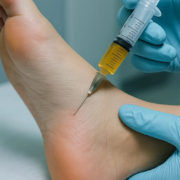
PRP therapy on foot

Is There a Natural Alternative to Foot Surgery for Chronic Pain?

Are you tired of resting, icing, and stretching, only to have your nagging foot pain return every morning? If you want to avoid the operating room and the side effects of traditional steroid injections, Carrollton Foot Center has a cutting-edge solution. Keep reading to discover how regenerative medicine can naturally heal your damaged tissue and get you back on your feet with virtually zero downtime.

Masking the Pain vs. True Healing

When you suffer from stubborn injuries like a torn ligament or chronic plantar fasciitis, traditional treatments often focus entirely on symptom management.

  • Corticosteroid injections can offer temporary relief, but they only mask the pain and can actually weaken your tissue over time.
  • Our clinic offers a radically different approach. By using stem cell recruitment therapy and minimally manipulated amniotic tissue, we focus on long-term, biological healing rather than temporary fixes.

The Power of Platelet-Rich Plasma (PRP)

Alongside amniotic injections, we frequently utilize Platelet-Rich Plasma Therapy (PRP) to accelerate your recovery.

  • This natural, non-surgical treatment uses a concentrated dose of your body’s own healing factors to physically repair the damaged area.
  • Because it is just a simple, in-office injection, there is no hassle, no anesthesia, and none of the risks associated with going into a surgical operating room.

We use advanced techniques to make the process virtually painless, effectively resolving:

  • Osteoarthritis and joint stiffness
  • Heel, ankle, and toe pain
  • Muscle and ligament tears
  • Achilles tendonitis and severe ankle sprains

Protect Your Healing

The goal of regenerative therapy is to give you high-quality care with minimal discomfort and downtime so you can return to an active lifestyle.

  • Once your tissue has naturally healed, we can easily pair your recovery with a set of custom accommodative orthotics to ensure your biomechanics stay perfectly aligned, preventing the injury from ever returning.

Ready to finally resolve your aching feet without going under the knife? Reach out to us today to see if you are a candidate for regenerative medicine!

Consult with Board-certified podiatrist Dr. Naghmeh Lilly Khavari, a knowledgeable professional who is dedicated to her patients in Denton, Dallas, and Collin Counties. Dr. Khavari treats a wide range of conditions, from ingrown toenails to foot and ankle injuries. Call Carrollton Foot Center’s office (located in Carrollton, Texas) at (469)-998-3668 to schedule your first appointment today!

salt treatment on feet

“Salt Stomping” and Grounding: Can You Really Absorb Wellness Through Your Feet?

If you have spent any time recently scrolling through wellness hashtags, you have likely encountered the latest foot-focused trends: “salt stomping” and “grounding.” Influencers are posting videos of themselves standing on warm Himalayan salt blocks for stress relief or walking barefoot through local parks to “connect with the earth’s energy.”

The promise behind these viral trends is incredibly appealing: by simply exposing your bare feet to natural elements, you can reduce systemic inflammation, absorb vital wellness, and instantly melt away daily anxiety.

But does science actually back up these claims?

Carrollton Foot Center explains below.

The Reality of the Foot-Brain Connection

Why does standing on a warm salt block or walking barefoot in the grass feel so relaxing? It is not necessarily magic or mystical energy; rather, it is basic human physiology.

  • Your feet are incredibly complex sensory organs, packed with thousands of densely concentrated nerve endings.
  • These nerves constantly communicate with your brain. When you stimulate the bottom of your feet with different textures, temperatures, or gentle pressure (like the principles of reflexology), it can help calm your central nervous system.
  • It forces you to slow down, practice mindfulness, and relieve the localized foot fatigue built up from wearing restrictive shoes all day.

In short, taking a moment to focus on the sensory experience of your feet is a great stress reliever. But it isn’t a cure.

When “Grounding” Backfires

While the mental health benefits of walking barefoot in the grass are real, the physical reality for your feet can be much more complicated.

  • Human feet evolved to walk on soft, uneven terrain, but modern humans spend 99% of their time walking on flat, unforgiving concrete and hardwood floors.
  • If you have an underlying structural issue like flat feet, overpronation, or a developing bunion, walking barefoot—even for “grounding” purposes—removes the essential support your arches need.
  • For many people, kicking off their shoes and going barefoot can quickly lead to painful flare-ups of conditions like plantar fasciitis or Achilles tendonitis.

 If you are experiencing sharp heel pain or arch aching after attempting these wellness trends, it is time to seek professional podiatry services rather than relying on internet fads.

The Proven Path to Foot Wellness

 If your feet are misaligned, that biomechanical stress travels up your kinetic chain, causing knee, hip, and lower back pain. You cannot achieve full-body wellness if your foundation is crumbling!

  • If you want to experience the profound relief of walking comfortably without joint pain, the answer is not a salt block. It’s precision engineering!
  • At our offices, we analyze exactly how your foot strikes the ground to correct the specific imbalances causing your discomfort.

From there, it’s just one more step to…

The Custom Orthotics Fix

Our office utilizes state-of-the-art, cutting-edge medical technologies to provide lasting, proven results.

We use digital scanning for a more precise impression of the feet, as well as a faster turnaround service from our lab. We also utilize traditional plaster molding for more complicated foot types with severe biomechanical abnormalities.

Step Into Real Relief

You do not have to rely on social media fads to find comfort. If you are struggling with foot pain, fatigue, or alignment issues, check out our patient blog for more clinical insights, or contact the expert team at Carrollton Foot Center today to schedule a consultation.

Consult with Board-certified podiatrist Dr. Naghmeh Lilly Khavari, a knowledgeable professional who is dedicated to her patients in Denton, Dallas, and Collin Counties. Dr. Khavari treats a wide range of conditions, from ingrown toenails to foot and ankle injuries. Call Carrollton Foot Center’s office (located in Carrollton, Texas) at (469)-998-3668 to schedule your first appointment today!
applying polish to toes

Treating Stubborn Fungal Nails: Why Over-the-Counter Polishes Fail

Summer is officially here in North Texas, which means sandal season is no longer approaching; it has arrived. If you are spending your summer painting drugstore anti-fungal lacquers onto yellow, crumbly, and thickened nails, you are wasting valuable time. Over-the-counter (OTC) polishes almost always fail to deliver results.

Why? Fungal spores (Onychomycosis) embed themselves deep within the nail bed and the nail matrix. OTC liquids simply sit on the hard, non-porous surface of the nail, failing to penetrate deep enough to eradicate the active infection. If you want your toes ready for the pool, you need a definitive medical strategy. Carrollton Foot Center explains below.

The Medical Solution with Lunula Laser

To actually clear a fungal infection, you must target the spores underneath the nail plate. Carrollton Foot Center proudly stands as the only podiatric office in North Texas utilizing the Lunula Laser: the only FDA-cleared cold laser therapy on the market for dystrophic and fungal toenails.

Unlike ineffective drops, our laser protocol is:

  • Painless & Safe: Because it is a cold laser, there is zero risk of burning the surrounding tissue. This makes it an incredibly safe treatment option, especially for patients with co-morbidities like diabetes.
  • Highly Effective: 89% of patients respond positively to this treatment, seeing clear nail growth in an average of six months.
  • Fast & Non-Invasive: The procedure is quick, requires no downtime, and causes absolutely no harmful side effects.

Immediate Summer Confidence with KeryFlex™

Here is the timeline reality: while the Lunula Laser actively destroys the fungal infection, a healthy toenail takes an average of six months to fully grow out.

 But you do not want to hide your feet in closed-toe shoes all summer waiting for results.

And you do not have to!

 We use the KeryFlex™ Nail Restoration System to bridge the gap, providing an immediate cosmetic transformation while your natural nail heals underneath.

  • Instant Sandal Readiness: In a single office visit, we apply a safe, non-systemic, medical-grade resin to remodel your damaged nail. You walk out with a realistic, flawless nail substitute ready for the beach.
  • Non-Porous & Flexible: The KeryFlex artificial nail is designed to bend naturally with the movement of your foot. More importantly, it allows your remaining natural nail to continue growing and healing uninterrupted underneath.
  • Life-Proof Durability: Your new KeryFlex nail is built for summer. It is completely unaffected by pool water, acetone, detergents, or standard nail polishes. You can paint it, remove the polish, and enjoy your vacation without damaging the restoration.

Stop Hiding Your Toes

Do not waste another summer feeling embarrassed by fungal nails and stop throwing money away on OTC gimmicks that cannot reach the root of the problem.

Call us. We can help restore your nails…and keep them fresh, too!

Consult with Board-certified podiatrist Dr. Naghmeh Lilly Khavari, a knowledgeable professional who is dedicated to her patients in Denton, Dallas, and Collin Counties. Dr. Khavari treats a wide range of conditions, from ingrown toenails to foot and ankle injuries. Call Carrollton Foot Center’s office (located in Carrollton, Texas) at (469)-998-3668 to schedule your first appointment today!

Bunions

Getting Rid of Bunions

Living with a bunion can not only be painful, but it can also disrupt much of your daily life. When the bones in the front part of your foot shift out of place, it creates a bony bump on your big toe joint. Walking, exercising, or wearing shoes may be more difficult with a bunion. The good news is, there are plenty of treatment options for bunions and we’re here to share some of them!

Symptoms

Some signs you may have a bunion include…

  • A bony bump on the base of your big toe
  • Pain, redness, or swelling around the big toe.
  • Calluses
  • Corns
  • Pain, particularly when walking
  • Difficulty moving your big toe.
  • Difficulty finding shoes that fit comfortably.

Treatment

Depending on the severity and pain of your bunion, treatment options vary. Most podiatrists will recommend one or more of the following:

  • Wearing comfortable shoes
  • Bunion pads or cushions
  • Over-the-counter medicine, like Advil
  • Cortisone shots
  • Padded shoe inserts, like orthotics
  • Applying ice
  • Attending physical therapy
  • Removing the swelling around the bunion
  • Removing part of the bone
  • Realigning the bone

One of the latest treatment options for bunions comes from Lapiplasty, an innovative 3D bunion correction procedure. Carrollton Foot Center understands that traditional bunion surgeries can come with complications and don’t necessarily fix the foot problem of a bunion. Lapiplasty, instead, alters the alignment of your bones, ensuring a permanent fix. Other benefits of Lapiplasty include…

  • One surgery to fix your bunion.
  • Recovery in a boot, instead of a cast
  • Ability to wear whatever shoes you’d like after surgery.
  • Minimal recovery time

Think Lapiplasty is for you? Call our office today to ask our team about it!

Board-certified podiatrist Dr. Naghmeh Lilly Khavari is committed to helping her clients in Carrollton, TX. She offers a wide variety of treatments from ingrown toenails to advanced surgical solutions. Contact Carrollton Foot Center’s office at 469-998-3668 to schedule an appointment today!

Feet

Healthy Eating for Healthy Feet

Did you know that what you eat and the habits you make can make a big impact on the health of your feet? March is National Nutrition Month and we want to raise awareness on this important topic. Keeping your body and feet in great shape well into your senior years is important if you want to stay active and mobile. Choosing healthier, vitamin-enriched foods is easier than most people think. How can you make better choices this March? Here are some of our top tips and tricks!

  1. Exercise 3-4 times a week. If you’re not into heavy lifting or long runs on the bike trail, keep it light with some yoga or a gentle walk. Any form of action will help you maintain a healthier weight and keep your blood flowing nicely.
  2. Ensure you’re eating enough fruits and veggies throughout the day. Instead of potato chips, grab an apple or some carrot sticks.
  3. Takeout may be quick and delicious, but they’re usually packed with excess sodium, sugars, and unnecessary ingredients. Go for home-cooked meals, where you can choose what goes into your meal.
  4. Make the switch to healthier alternatives to your favorite foods. Like pasta? Try whole wheat or veggie pasta! White rice may be tasty, but quinoa and brown rice pack a lot more nutritional value. Making potatoes for dinner? Leave the skins on or try sweet potatoes! Instead of your daily bowl of breakfast cereals, go for oatmeal or granola to cut down on sugar.
  5. Dehydration isn’t good for your body and digestive system, so make sure you’re drinking 6-8 glasses of water per day.
  6. Do you tend to skip breakfast? Breakfast is the most important meal of the day. If you’re normally rushing around in the morning, go for something quick and easy, like a banana or a cup of yogurt. You can take them on the go, too!

Board-certified podiatrist Dr. Naghmeh Lilly Khavari is committed to helping her clients in Carrollton, TX. She offers a wide variety of treatments from ingrown toenails to advanced surgical solutions. Contact Carrollton Foot Center’s office at 469-998-3668 to schedule an appointment today!

Stretching

The Benefits of Stretching Your Feet

Our feet do so much for us, but unfortunately, they’re often overlooked when it comes to physical health and self-care. Taking care of your feet, ankles, and toes can go such a long way. One of the best ways you can do so is by stretching your feet daily. Not only will it help with injury prevention, but it can ease any foot pain you experience and appropriately prepare you for your next workout. Let’s take a closer look!

Keep Your Feet Healthy

The average person walks 150,000 miles in their lifetime. At that rate, your feet are likely to go through some wear and tear as you age. Injuries happen, whether you take precautions or not, especially if you’re athletic. Stretching can not only help you avoid certain overuse injuries but reduce the possibility of developing conditions like plantar fasciitis and Achilles tendonitis. It also helps improve…

  • Blood circulation in your legs. This can go a long way if you have diabetes!
  • Posture
  • Muscle strength
  • Balance
  • Foot pain due to conditions like arthritis, flat foot, and heel pain

Tips and Tricks

As with anything, there’s a right and a wrong way to stretch your feet. To ensure you stay safe during your exercise and get the maximum amount of benefits, keep these tips in mind:

  • If your feet start to hurt, stop your exercise immediately
  • Focus on sore spots.
  • Start slow and easy.
  • Take your time! There’s no rush.
  • Make sure you’re stretching for at least 30 seconds at a time.
  • Repeat on both feet.

Board-certified podiatrist Dr. Naghmeh Lilly Khavari is committed to helping her clients in Carrollton, TX. She offers a wide variety of treatments from ingrown toenails to advanced surgical solutions. Contact Carrollton Foot Center’s office at 469-998-3668 to schedule an appointment today!

Toe Cramps

Dealing With Toe Cramps

Toe cramps may not be a serious condition, but the effects of it can range from mild annoyance to serious pain that makes walking more difficult. If toe cramps are interfering with your daily life, it’s crucial that you talk to your podiatrist for fast and easy relief. They can help get you back on the right path to being pain-free and help diagnose the root cause of the cramping! Let’s take a look at some of the most common reasons why you might have toe cramps.

Tight or Weak Muscles

There are dozens of tiny muscles in your feet and toes. If one of them becomes too tight or weak, it can lead to muscle spasms, which create pain. Ankle pain and Achilles tendonitis are also known to leave you with toe and foot cramps. New exercise routines, too-tight shoes, sitting for too long, and not stretching before your workout can all lead to muscle tension and weakness.

Ill-Fitting Shoes

High heels, too-tight shoes, or too-loose shoes can put too much pressure on your toes, making way for pain and eventually cramps. Finding shoes in your right size with a wide, spacious toe box is key to eliminating toe cramps.

Dehydration

Dehydration is known to make your muscles feel tight and tense. This tension can easily lead to cramping if you’re dehydrated for an extended period. Ensure you’re drinking enough water throughout the day.

Muscle Injuries

An unhealed injury to your feet, calves, or toes can cause toe cramping and soreness. Sprains, strains, and other injuries to your ligaments typically create pain and tenderness in your toes.

Board-certified podiatrist Dr. Naghmeh Lilly Khavari is committed to helping her clients in Carrollton, TX. She offers a wide variety of treatments from ingrown toenails to advanced surgical solutions. Contact Carrollton Foot Center’s office at 469-998-3668 to schedule an appointment today!

Call Now ButtonCall Now!